You don't need a better strategy.
You need to operate differently.
An embedded operating partner for healthcare growth companies.
You get the operating system, leadership capability and execution discipline your next stage of growth requires. Built with your team, so it holds after I leave.
Let's ConnectTrusted by executives at



The growth problem
"What got us to $700M isn’t going to get us to $2B."
EVP · $700M healthcare software business
The growth strategy is not the missing piece.
Every quarter still feels like a reset: priorities shifting, fighting fires, rinse and repeat. The strategy is there. The talent is there (usually). How you focus the business, and shift the operating system for the next phase of growth, is not.
- Everybody wins independently and nobody wins with the customer. Each function hits its own number. The growth lives in how the customer experiences your cross-functional OS, and nobody owns that.
- The growth math quietly stops working. 12% where there used to be 22%. Headcount absorbing growth the operating model should be absorbing.
- Alignment was a moment, without an operating system. The team left the offsite aligned. The real challenges showed up when they tested it with the market and tried to operationalize it across the organization.
Rarely is this a diagnosis or analysis problem. It persists because the transformation competes with running the business, and off the side of the desk has never once been enough.
Why now
The call usually comes at one of three moments.
1
A new leader just landed
The mandate is to stabilize the business and return it to best in class. What they need is capacity beside them, not another direct report.
2
Something just got acquired
Integration has to accelerate toward one platform, without disrupting the revenue already on the books.
3
Innovation has stalled
Nothing has moved the market in a few years. The leadership team needs re-igniting around a growth strategy and a return to execution.
In all three, the growth strategy is not the missing piece. How you focus the business and shift the operating model to execute it is.
"Colin saved our SLT a month’s worth of work."
SVP & GM · healthcare technology business
How the work goes
A workshop is a catalyst.
It will not transform the business.
Executive teams leave a strategy offsite believing they have alignment. How a business executes does not change in two days. What two days can do is build the clarity and conviction to change it, and produce a signal of progress worth pointing at internally and in the market. The hard work starts in the months that follow.
You will not scale your way into a new way of operating.You operate your way into it.
A shared point of view on where the market is going. The two or three execution challenges that actually limit growth. Ninety-day outcomes the team commits to out loud, and the first decision norms they agree to hold each other to.
The operating model and mechanisms get activated: roles, decision rights, and the interfaces between the functions that keep re-litigating. The weekly rhythm runs. Critical steering metrics go live and start driving decisions rather than reporting them upward. One cross-functional initiative is in flight and proving the team can execute differently.
The foundation holds under real decisions. Capital, roadmap and priority trade-offs flow through the model instead of escalating to the top. Decision-making moves out of the leadership team and into the critical cross-functional pockets of the business where growth is actually won. The initiatives that started in the foundation phase compound rather than stall.
The operating system spreads cross-functionally and becomes self-sustaining. The team has the reps to evolve it as the market shifts, which is a different thing from having been taught it. My role thins to lighter-touch sparring, then ends. The capability transitions in-house, which was the point.
"If we are doing this same work twelve months from now, we will have failed."
What I tell every internal sponsor
How it works
Three components, one system.
1
Executive Sparring
The top leader and three or four executives, in service of the transformation. Protected space for external perspective and empathetic challenge, on a weekly or biweekly rhythm.
2
Strategy Execution Offsites
The working session that is usually missing. Prioritization, trade-offs, and operationalizing the strategy with the whole leadership team. Quarterly, then bi-monthly.
3
Embedded Initiative Capacity
Where the operating model actually shifts, while the culture stays intact. Focused capacity applied to one or two cross-functional imperatives at a time.
Each component works alone. Together they convert alignment into execution capability. Nobody counts hours, and the engagement is designed to end.
Alignment at the leadership team is the starting point, not the outcome. The work has to land where growth is actually won or lost.
- Go-to-market and customer experience. How the customer experiences the business across every function, and where revenue growth is won or lost.
- Product strategy through engineering delivery. Customer feedback to backlog to roadmap to what actually ships, and how quickly.
- Talent and culture. The capability and the ways of working that carry the other two.
Most of the executives I work with are reporting up to an ELT or a board and driving execution down at the same time, with no one to think out loud with.
"This felt like therapy."
What executives tend to say at the end of a first call
The work in practice
Where this has worked.
Starting with critical EVPs and SVPs of business units and cross-functional areas. Not enterprises.
$400M veterinary software business
inside a $3B category leader
$400M health enablement business
inside a $4B payer-focused business
$400M enterprise imaging business
inside a $21B provider business
- The best commercial year in a decade at the imaging business, with bookings at an all-time high and margins climbing quarter over quarter. The bigger change was the team's confidence that it could execute.
- A winning streak extended through an acquisition at the enablement business, from winning four months in a row, after multiple years of variability, to sixteen months in a row and counting, while beating the growth target. Their words for it: integrate, harden, harmonize.
- Leader-led became team-owned. The same shift in all of them. The top leader stops being the only one stitching every story together, and the operating system carries it instead.
How to start
Two doors into the same system.
$35–50K
Growth Execution Workshop · 2 days
Travel & expenses (included)
Start with the catalyst.
Interviews across the leadership team, a co-designed agenda, two days facilitated, and a roadmap session afterward. You leave with a shared market point of view, the two or three challenges that matter, and ninety-day outcomes.
Best when the team knows something has to change and has not yet agreed on what.
$90–125K
90-Day Growth Accelerator
Growth Execution Workshop (included)
Start with the OS foundation.
All three components running together for a quarter, including a growth execution offsite. The operating model and mechanisms activated, critical steering metrics live, and the first cross-functional initiative in flight.
Best when the strategy is already settled and the constraint is operating it.
Engagements typically run twelve to eighteen months from there, by which point the capability has transitioned in-house. There is no obligation past the first ninety days.
Why this approach
Why an embedded operating partner.
You raise this before I do.
"We’ll spend a million dollars in six weeks and the output will be a bunch of pretty slides that no one knows what to do with."
EVP · $700M healthcare software business
- A consulting firm diagnoses well and leaves before the hard part. You already have the analysis. What you do not have is the quarter where it gets operated.
- A fractional executive inherits the politics and the org chart. They become another box, working under the same constraints as the boxes you already have.
- Doing it in-house asks leaders to design the organization while participating in it. It is the honest first answer, and it is why no capacity is the most common thing I hear.
Each of those addresses part of the work. What tends to be left: a strategy that does not translate beyond the leadership team, cross-functional initiatives that swirl, and operating rhythms that begin to form then quietly dissolve under day-to-day pressure.
Where this does not work
- If it stays inside one silo. A single function or business area can improve, and the growth outcome will not move.
- If command and control is the only way the leader drives outcomes. The whole point is that decisions stop routing through one person.
- If the expectation is a framework to scale from day one. There is no playbook that arrives pre-solved. This takes reps to build earned confidence, and it is a capability rather than a project.
Not advice from the sidelines. I'm embedded with you.
About
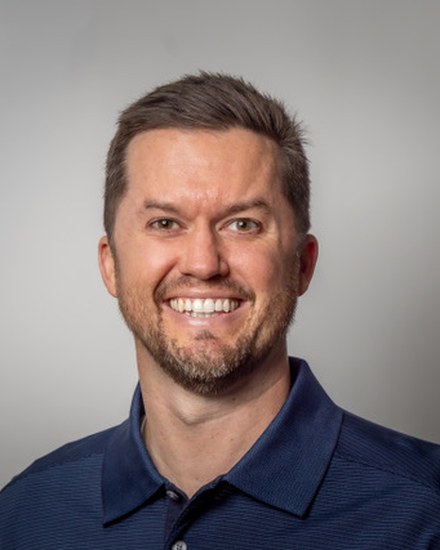
Growth should not feel fragile and episodic.
That conviction is why I started Mulholland Advisory. Too many healthcare leadership teams have the talent and the strategy, and every quarter still feels like a reset.
Ten years working alongside leaders on growth and transformation, leading the Organizational Transformation Practice inside Change Healthcare and then consulting alongside Fortune 500 executive teams, taught me it is not about more frameworks or another board deck. It is about fewer bets, clear ownership, and decisions that accelerate time to value. It is teams building the systems and the capability to win together, until growth starts behaving like an operating system.
We usually start by getting aligned on what matters most, then rolling up our sleeves on one cross-functional growth initiative that proves the team can execute differently and deliver real results.
I keep the practice small on purpose. Two or three executives and their teams at a time, usually over twelve to eighteen months, because this kind of change takes trust and repeatability, and those compound.
My wife and I have two young kids, and I built MA to fit the life design of this season: meaningful, high-stakes work driving growth in healthcare, while staying present at home and connected to community here in Atlanta.
First step
This work is better experienced than explained.
Two discovery conversations is usually enough to know whether there is something there. No pitch deck. No framework that gets pushed onto you. No 25-year-old MBA analyst in delivery.